
Start a Business in Illinois
You don't have to quit your job to own a business in Illinois — and you don't have to hand your future to a franchisor either. Azgari builds custom service businesses for owners across the country, runs them through the first year, and hands over a business the owner owns outright. A 2026 bill (SB3709) proposing to halve LLC fees has not passed — the $150 formation and $75 annual report fees remain in force.
Illinois at a glance
The risks, honestly
Buy a franchise
National medians — $49,500 franchise fee; $265K–$573K total initial investment; about 8% of gross every year in royalty + brand fund; 10-year median term; 85% of franchise agreements grant no exclusive territory.
Buy an existing business
$350,000 median sale price; on a typical financed deal about $75,000 a year goes to debt payments before the owner pays themselves; you inherit the staff, the reviews, the lease, and the books — good or bad.
Start it yourself, alone
About half of new businesses don't survive five years (U.S. Bureau of Labor Statistics); every mistake is yours, paid in full, usually while you're still learning the job.
Launch with Azgari
The expensive first-timer mistakes get caught before they cost you; you own 100% of the business and the brand; no royalties, no acquisition debt, no franchisor's rules; built and run through year one while you keep your job.
Watch the risks
The franchise lane
Made redundant at 59, she was steered by the wrong coach into a franchise she ran for two years and hated — the wrong help cost her money and the confidence she had built over a long career.
The buy-a-business lane
The seller had run the cost of goods "in his head" for decades — the margins he bought didn't exist, and the business burned through its cash and ran out of runway.
The start-alone lane
“We had failed, it should have been done… I mortgaged my house, I took everything I had, and put back into this company.”
The managed launch
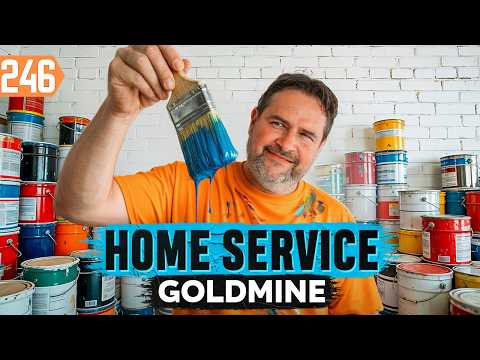 ▶
His mentor sold him the painting business he had worked in, on terms he could carry — and he says he wouldn't be where he is without him.
Doing business in Illinois’s cities
Chicago
The Midwest's largest market, with unmatched air, rail, and finance depth.
Pros
- O'Hare is a hub for United and American, with global passenger and cargo reach.
- Headquarters and hiring depth in finance, food, health care, and logistics.
- CTA rail, Metra, and six Class I railroads support car-light operations.
Cons
- Illinois combined corporate rate is 9.5% as of 2026, among the highest nationally.
- Cook County property and sales taxes add materially to occupancy costs.
- Lake-effect snow and winter delays affect air and road freight.
Springfield
The state capital, where government work and health care anchor demand.
Pros
- State agencies provide steady demand for vendors, legal, and professional services.
- Memorial Health and HSHS St. John's anchor a regional health-care cluster.
- I-55 and I-72 put Chicago and St. Louis within a day's drive.
Cons
- Small private-sector market limits customer depth outside government and health care.
- Abraham Lincoln Capital Airport offers limited commercial service, requiring connections.
- Illinois combined corporate rate is 9.5% as of 2026.
Peoria
A river and manufacturing city built around heavy equipment and health care.
Pros
- Caterpillar's historic base sustains engineering, suppliers, and skilled trades.
- OSF HealthCare and Carle Health provide large, stable health employment.
- Illinois River barge access plus I-74 lowers bulk shipping options costs.
Cons
- Manufacturing concentration exposes hiring and sales to equipment cycles.
- General Wayne A. Downing Peoria International Airport has limited nonstop routes.
- Population has been flat to declining, limiting local market growth.
Rockford
A lower-cost manufacturing and logistics base near the Wisconsin line.
Pros
- Aerospace suppliers cluster around Collins Aerospace and Woodward operations.
- Chicago Rockford International Airport is a growing UPS cargo hub.
- I-90 access reaches Chicago and Madison without Chicago land prices.
Cons
- Legacy manufacturing job losses still weigh on parts of the city.
- Limited passenger air service means most travelers use Chicago airports.
- Cold winters and older industrial stock raise maintenance and heating costs.
Why owners who want control choose this path
Full control
Your brand, your prices, your territory, your calls. No franchisor can veto, rebrand, or non-renew you.
Yours for the long term
No 10-year term clock, no renewal fees, no transfer approval. The business and the brand are assets you own outright — to grow, hand down, or sell.
Less expensive to start
Forming an LLC in Illinois costs $150 — there is no $49,500 franchisor fee on top. The full package comparison is on the Pricing page. See the Pricing page.
Forming in Illinois
The Illinois trap owners miss
The report window closes before your anniversary month begins — owners who assume they have the whole anniversary month are already delinquent, at a $100 penalty for each delinquent year, with administrative dissolution for continued non-filing.
Launching in Illinois with Azgari
You bring the decision. Azgari builds the business, hires and trains the first team, and runs it through year one while you keep your job — then hands you a business you own outright.
Book the $500 working session
Build-or-Buy Decision Consultation
Start with a $500 working session — one hour with Azgari Lipshy personally. You leave with a written plan that tells you which path fits and what it will cost. The $500 is credited toward your launch if you sign, and the total at checkout is $545.50 with the processing fee.
Book the $500 working session